









Contrast Therapy Timing: How Long, What to Do First, & When?
A typical home contrast therapy session is 10–20 minutes in a sauna at roughly 170–190°F, followed by 1–5 minutes in a cold plunge at 39–55°F, repeated for two or three rounds. Start with heat, end with whichever temperature suits your goal, and adjust the number of rounds to your experience level.
Once you have access to both a sauna and cold plunge, putting those numbers into practice raises a few more questions. How long should you stay hot or cold within those ranges? When should you adjust the timing? And does it matter which temperature you finish with?
There is no single contrast therapy protocol proven to be ideal for everyone. Research on this form of hydrotherapy treatment has used different temperatures, exposure times, and hot-to-cold ratios, so the ranges above are practical starting points. Your timing should account for the temperatures you're using, your experience, and why you're doing contrast therapy in the first place.
Here's how to fine-tune each part of your session without making the routine more complicated than it needs to be.
What you need for a home contrast therapy setup
A workable at-home routine needs two things: a heat source that can sustain roughly 170–190°F for the length of your session, and cold water held between about 39°F and 59°F.
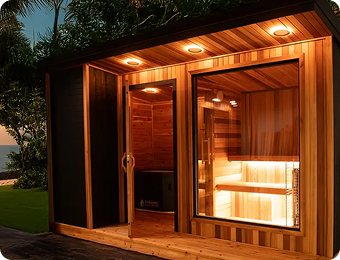
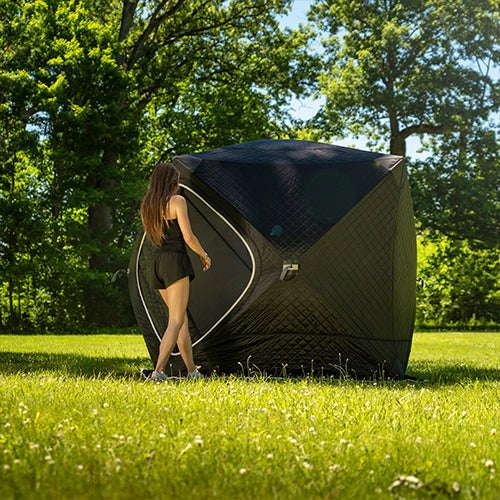
Most NW Immersion customers pair a traditional sauna or infrared sauna with a cold plunge tub and a dedicated cold plunge chiller. If your space is tight, our Immersion Tub handles both hot and cold in a single vessel.
Contrast Therapy Timing: How Long Should You Do Hot and Cold Therapy?
A practical contrast therapy session typically involves 10 to 20 minutes of heat followed by a shorter cold exposure, repeated for two or three rounds. Treat that as a starting framework rather than a scientifically established formula.
Sauna research has commonly used heat exposures of 5 to 20 minutes, while contrast and cold-water studies use a much wider range of protocols.
Temperature matters alongside time. A colder plunge generally warrants a more conservative exposure, particularly for beginners, while experienced users may find different combinations comfortable.
How long should the hot portion last?
For a sauna-based contrast therapy routine, around 10 to 20 minutes of comfortable heat exposure is a reasonable range. Sauna studies have commonly examined individual exposures lasting 5 to 20 minutes, sometimes repeated over several rounds.
You don't need to remain in the sauna until the timer reaches a particular number.
Sauna temperature, humidity, individual heat tolerance, and how you're feeling that day all affect how long a session remains comfortable. Leave sooner if you become dizzy, nauseated, unusually weak, or otherwise unwell.
How long should the cold portion last?
Cold timing deserves a little more nuance. Research on cold-water immersion after exercise has often found benefits for muscle soreness with approximately 10 to 15 minutes in cold water. More recent analyses continue to find that the effects depend on the temperature, duration, exercise type, and outcome being measured.
That does not mean every sauna-to-cold-plunge round needs a 10- or 15-minute cold exposure. Those studies investigate post-exercise cold-water immersion and are not a universal home contrast therapy prescription. During repeated hot-and-cold cycles, shorter cold periods may be more practical and tolerable.
The colder the water, the less reason there is to chase a long exposure simply for the sake of staying in longer. More extreme cold has not been established as universally better for recovery.
How many rounds should you do?
For home contrast therapy, two or three hot-and-cold cycles is a sensible place to start. Beginners may prefer a single cycle while learning how their body responds to both temperatures.
There isn't a proven number of rounds that everyone needs to complete. In one study of trained runners, researchers compared 6, 12, and 18 minutes of contrast water therapy using alternating one-minute periods. Interestingly, the six-minute protocol performed better than passive recovery in the subsequent running test, while the longer protocols did not show the same advantage.
That doesn't establish six minutes as the perfect protocol, but it illustrates an important point: longer contrast therapy isn't automatically better.
How long should an entire contrast therapy session last?
There is no required total contrast therapy duration. If you spend 10 to 15 minutes in the sauna, take a brief cold plunge, and repeat the sequence twice, the entire routine can remain relatively compact. Longer sauna periods or additional rounds naturally extend it.
It's more useful to think about the session as a series of manageable heat and cold exposures rather than trying to reach a predetermined total time. Once additional rounds stop feeling useful or comfortable, there is little reason to keep adding them simply to make the session longer.
Should you rest between hot and cold?
A long rest period isn't required between each phase of contrast therapy. The temperature change itself is the defining feature of the practice, so many routines transition fairly directly between hot and cold.
You also don't need to race between them. Step out of the sauna carefully and give yourself enough time to move safely. Enter the cold water under control. If you feel lightheaded after the heat, sit or stand somewhere safe until it passes.
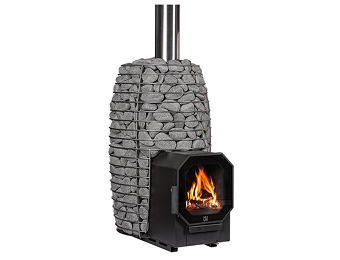
Hydration is very important when repeated sauna rounds are involved. Heat exposure increases sweating and fluid loss, and higher-output electric sauna heaters or wood-burning heaters can push a room hotter than you might expect. Drink water as needed throughout longer sessions.
Should You End Contrast Therapy With Hot or Cold?
You can finish contrast therapy with either heat or cold. There isn't strong evidence establishing that everyone should end on one particular temperature, and claims that finishing cold somehow "locks in" the benefits of contrast therapy go beyond what the research currently supports.
A more useful approach is to consider what you're doing after the session and how each temperature leaves you feeling.
Ending with cold
Finishing with the cold plunge is common, particularly when contrast therapy is used during the day or after exercise. Cold exposure can feel refreshing and alerting, making it a natural stopping point for people who prefer to leave the session feeling cooled down.
If you choose to end cold, the final plunge doesn't need to become an endurance test. Use a temperature and duration you can tolerate safely.
Ending with heat
Finishing in the sauna may make more sense when relaxation is the priority. Some people simply prefer leaving their contrast therapy session warm, especially during colder weather or when using the sauna as part of an evening wind-down routine.
Research on heat and cold recovery methods doesn't establish finishing warm as physiologically superior either. This is largely a matter of your purpose, comfort, and what you plan to do afterward.
Does the order of hot and cold matter?
Contrast therapy research doesn't use one universal sequence. Studies differ in temperature, timing, number of cycles, and even whether the protocol finishes hot or cold, which makes it difficult to claim that one order produces the best results for every purpose.
For a home sauna and cold plunge setup, starting with heat and moving into cold is a practical and widely used approach. It lets you warm up comfortably before introducing cold exposure, then repeat the sequence if desired. The important part is using both temperatures within limits you tolerate well rather than chasing a supposedly perfect ratio.
When Is the Best Time to Do Contrast Therapy?

There isn't one best time of day to do contrast therapy. The more useful question is where it fits within your training or wellness routine. Someone recovering between hard workouts has different priorities than someone using a sauna and cold plunge to unwind at home.
Research has focused heavily on post-exercise use, but contrast therapy can also be used on recovery days or as a standalone wellness practice. Timing becomes especially valuable when another demanding workout is coming up soon.
After exercise
Post-workout recovery is one of the most studied uses of contrast therapy, with this form of hydrotherapy treatment commonly examined for its effects on soreness and physical recovery. A systematic review of contrast water therapy found improvements in muscle soreness and recovery of strength compared with passive rest, although the included studies varied considerably in their protocols and had a high risk of bias. Research in team-sport athletes has also found some improvements in perceived fatigue following contrast water therapy.
That makes after exercise a reasonable time for contrast therapy when recovery between demanding sessions is the priority. Still, feeling less sore doesn't necessarily mean every measure of physical performance has recovered faster, so expectations should remain realistic.
Before another workout or competition
Be more cautious with cold exposure if another power-intensive activity is coming immediately afterward. A 2026 systematic review found that acute cold-water immersion temporarily reduced countermovement jump performance immediately after exercise, although the effect was no longer apparent at 24 to 48 hours.
If you're about to sprint, jump, lift heavily, or compete, an intense cold plunge immediately beforehand may therefore work against what you're trying to accomplish. Contrast therapy generally makes more sense once the day's demanding physical work is finished or when sufficient recovery time remains before the next session.
On rest and recovery days
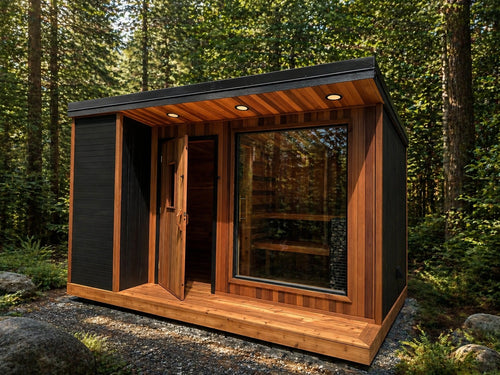
Contrast therapy doesn't have to follow a workout. A rest day can be a convenient time for a longer sauna and cold plunge session because there is less concern about immediately returning to strenuous exercise. An outdoor sauna pairs especially well with a rest-day routine when you want to spend more time outside between rounds.
You also don't need a special recovery-day protocol. Keep the temperatures and exposure times within comfortable limits and adjust the number of rounds according to how you feel.
Morning vs. evening
Current research doesn't establish morning or evening as universally better for contrast therapy. For general wellness, the time you're most likely to use your sauna and cold plunge consistently may matter more than forcing the routine into a particular part of the day.
Personal preference can guide how you finish the session as well. Some people like the alert feeling of ending with cold during the day, while an evening user may prefer to finish warm or use less intense cold if that better suits their wind-down routine.
How to Adjust Contrast Therapy Timing for Your Goal
A useful contrast therapy protocol should reflect what you're trying to accomplish. Recovery after demanding exercise, a relaxing evening session, and someone's first experience with cold immersion don't necessarily call for identical timing.
Instead of searching for one perfect hot-to-cold ratio, adjust the session according to its purpose.
For post-workout recovery
Contrast therapy can be useful when reducing soreness and feeling recovered between demanding bouts of exercise are the priorities. Research suggests contrast water therapy can outperform passive rest for some recovery outcomes, although it hasn't consistently proven superior to other established recovery methods.
Cold exposure also deserves some strategic thinking if strength and muscle growth are major training goals. Studies have found that regular cold-water immersion immediately after resistance training may blunt some long-term strength or hypertrophy adaptations, particularly when used repeatedly after training.
That doesn't mean lifters need to avoid cold plunges altogether. It means routinely jumping into cold water immediately after every strength workout may not be the best timing when maximizing adaptation is the priority.
For general wellness and relaxation
You don't need an athletic recovery protocol to use contrast therapy at home. For general wellness, comfortable heat followed by a manageable period of cold can provide the contrast experience without turning every session into a test of endurance. Many at-home users also add a sauna-rated red light panel to the heat round for a light-therapy layer during longer, low-intensity sessions.
This is also where personal preference deserves more influence. Someone who enjoys longer sauna sessions and brief cold plunges doesn't need to match the timing used in a sports laboratory for the routine to have a place in their day.
For beginners
Start with shorter exposures and fewer rounds while you learn how your body responds. One comfortable sauna session followed by a brief cold plunge may be enough for your first few attempts.
Increase duration or add another round gradually rather than changing temperature, exposure time, and cycle count all at once. Contrast therapy should become easier to manage as you gain experience.
| PRO TIP: As you enter the cold water, focus on slow, controlled breathing and staying calm while your body adjusts.
For experienced sauna and cold plunge users
Experienced users can adjust timing according to established tolerance, the temperatures they're using, and the purpose of the session. That might mean changing the length of the cold portion, adding another cycle, or spending more time in comfortable heat.
Experience still doesn't create a biological requirement to chase colder water or longer sessions. A 2026 network meta-analysis of 87 cold-water immersion studies found that the most favorable protocols differed according to exercise type and recovery outcome, with much of the evidence rated low to moderate certainty.
Use this as a starting framework, then adjust to your temperatures, experience, and how you feel that day.
Contrast Therapy Timing By Goal
|
Goal |
Sauna Round |
Cold Plunge Round |
Rounds |
Finish |
|
General wellness |
12-15 min at 170-180°F |
1-3 min at 50-55°F |
2 |
Either |
|
Post-workout recovery |
10-15 min at 175-185°F |
2-5 min at 50-59°F |
2–3 |
Cold |
|
Strength Training |
10-15 min at 175-185°F |
Skip, or < 1min |
1-2 |
Hot |
|
Evening Wind-down |
15-20 min at 165-180°F |
1-2 min at 55°F |
1-2 |
Either |
|
Beginners |
8-12 min at 160-170°F |
30-60 sec at 55-59°F |
1 |
Either |
These are practical starting points. Temperature, experience, individual response, and the type of exercise you're recovering from should still guide the session.
READ NEXT: Science-Backed Benefits of Cold Plunging for Women
Other Frequently Asked Questions (FAQs)
How cold should a cold plunge be for contrast therapy?
Research on post-exercise cold-water immersion typically uses 50–59°F (10–15°C). Colder water isn't automatically better — shorter durations at moderate temperatures are more practical for repeated rounds. A dedicated cold plunge chiller makes it easy to hold your target temperature session after session.
Can I do contrast therapy every day?
Daily use is generally fine for general wellness. If strength or hypertrophy is a training priority, avoid cold immersion immediately after resistance workouts on a routine basis and place your cold plunge sessions on rest days or well before lifting.
Do I need a separate chiller, or is an ice bath enough?
Bagged ice works for occasional use, but a dedicated chiller holds a stable temperature, filters the water, and pays for itself quickly for anyone plunging more than twice a week. Compare options in our cold plunge chillers collection.
What's the minimum space I need for a home sauna and cold plunge setup?
A two-person indoor sauna plus a compact plunge fits in roughly 60–70 sq ft. For tighter spaces, the Immersion Tub combines hot and cold in a single footprint.
Build Your Contrast Therapy Setup with NW Immersion.
A sustainable routine starts with equipment matched to your space, water source, and how often you plan to use it. Handcrafted in Vancouver, WA, our team has helped Pacific Northwest households design contrast therapy setups that actually get used, not showpieces that sit unused after the first month.
- Browse saunas - indoor, outdoor, infrared, and signature builds
- Compare cold plunge tubs and chillers
- See our all-in-one Immersion Tub for hot and cold in one vessel
- Not sure where to start? Take our Sauna Finder quiz or size your heater with the heater sizing calculator
-
Talk to a specialist: (360) 360-6968 · info@nwimmersion.com


