









Cedar vs Hemlock Sauna: Which Wood Should You Choose?
The type of wood used in a sauna affects how it looks, feels, and holds up over time. Some woods have a distinctive aroma and rich natural coloring, while others offer a lighter appearance and a more neutral scent. Their response to heat and moisture can differ, too.
Western Red Cedar and hemlock are two popular choices for sauna construction. Both are softwoods, but their natural properties make them better suited to different preferences and environments. Cedar is particularly valued for its resistance to decay. Hemlock on the other hand offers a clean, understated appearance, often at a more accessible price.
This cedar vs hemlock sauna comparison explores their differences in heat performance, durability, maintenance, and cost to help you decide which wood belongs in your home.
Hemlock vs Cedar Sauna: How Do They Compare?
Western Red Cedar generally offers better natural decay resistance and dimensional stability, while hemlock is a practical alternative for those who prefer lighter-colored wood with little noticeable aroma.
Here's how the two materials compare at a glance.
|
Feature |
Western Red Cedar |
Hemlock |
|
Color |
Reddish-brown with natural variation |
Pale cream to light brown |
|
Aroma |
Distinctive, woody scent |
Mild, relatively neutral |
|
Heat comfort |
Generally stays more comfortable to touch |
Can feel warmer at the same temperature |
|
Decay resistance |
High in naturally durable heartwood |
Relatively low |
|
Dimensional stability |
Lower shrinkage |
Greater shrinkage |
|
Maintenance |
Routine cleaning and drying |
Routine cleaning and careful moisture control |
|
Cost |
Generally more expensive |
Often more affordable |
Heat performance and comfort
Both cedar and hemlock can withstand the temperatures encountered in a properly designed sauna. The more noticeable difference is how their surfaces feel against your skin.
Western Red Cedar is a relatively lightweight wood with low thermal conductivity, meaning it transfers heat slowly. This makes it suitable for benches, backrests, and other surfaces that come into direct contact with the body.
Hemlock is denser and generally conducts heat more readily; its surfaces can feel warmer under comparable conditions. However, properly constructed hemlock benches can still provide a comfortable sauna experience.
Moisture resistance and durability
Saunas experience repeated changes in temperature and moisture. The wood must tolerate these conditions without excessive movement or deterioration.
Western Red Cedar has a natural advantage because its heartwood contains compounds that help resist decay. It also experiences relatively little dimensional change as its moisture content fluctuates.
According to the USDA Forest Service's Wood Handbook, Western Red Cedar has approximately 6.8% volumetric shrinkage from green to oven-dry conditions, compared with approximately 12.4% for Western Hemlock. These figures describe the woods' inherent shrinkage characteristics.
Hemlock is less naturally resistant to decay and generally requires greater protection against prolonged dampness, especially in exposed outdoor applications.
Cedar therefore has an advantage where moisture exposure and long-term dimensional stability are priorities. Proper ventilation and drying remain important for either material.
Appearance, aroma, and overall experience
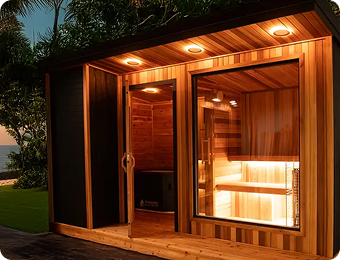
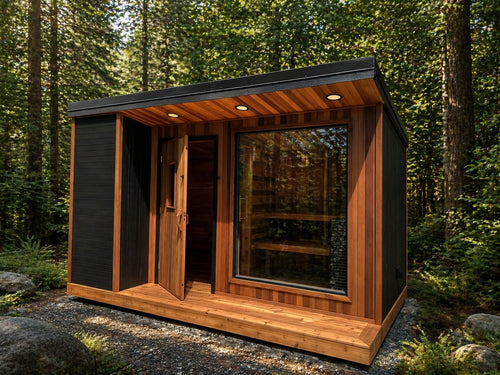
Western Red Cedar is recognizable for its warm reddish-brown tones, visible grain, and characteristic woody aroma. Its natural color variation gives sauna interiors a distinctive appearance, although the wood can gradually change color with age and exposure to light.
Hemlock has a considerably lighter appearance, typically ranging from creamy white to pale brown. Its relatively uniform coloring works well in minimalist interiors where a bright, uncluttered look is preferred.
The difference in scent is equally noticeable. Cedar releases a recognizable aroma, particularly when warmed, whereas hemlock has a much milder smell.
Neither preference is inherently better. People who enjoy the scent of natural cedar may find it an appealing part of their sauna routine. Those sensitive to strong wood aromas may prefer hemlock, although any wood species can release natural airborne compounds when heated.
Cost and long-term maintenance
Hemlock is often less expensive than Western Red Cedar, making it attractive for buyers working within a tighter budget. Actual prices depend on lumber availability, grade, manufacturing quality, and the sauna's overall design.
Cedar's higher initial cost can be worthwhile for applications where its natural durability and stability are especially useful.
Both woods need regular care. Allow the sauna to dry after use, wipe down benches when necessary, and follow the manufacturer's cleaning recommendations. Avoid leaving standing water on wooden surfaces or applying ordinary household finishes that have not been approved for sauna temperatures.
With appropriate construction and maintenance, both materials can serve well for years.
ALSO READ: How to Clean a Cedar Sauna: A Complete Maintenance Guide
Hemlock Sauna vs Cedar Sauna: Which is Better for Indoor and Outdoor?
The installation location can influence which wood is the better investment. Indoor saunas benefit from a more controlled environment, while outdoor models must contend with changing weather conditions.

For indoor saunas
Both cedar and hemlock are suitable for indoor saunas when the wood is properly dried and the room is designed for adequate ventilation.
Hemlock is a sensible choice for homeowners who prefer a bright, modern interior without cedar's pronounced scent. Cedar, meanwhile, offers a warmer aesthetic and lower dimensional movement as humidity changes.
For indoor installations, personal preference can carry considerable weight because the surrounding structure protects the sauna from direct weather exposure.
For outdoor saunas
Western Red Cedar generally has the advantage outdoors, particularly where the wood is exposed to changing moisture levels. Its naturally decay-resistant heartwood and dimensional stability make it a popular material for exterior construction.
Hemlock can also be used in outdoor sauna structures, provided it is appropriately protected from weather and prolonged moisture exposure. However, untreated hemlock is generally less suitable for exposed exterior components.
Regardless of the species, a properly designed roof, effective drainage, and adequate ventilation are essential to preserving an outdoor sauna.
What Else Should You Check Before Choosing Sauna Wood?
The hemlock vs cedar for sauna debate is only one part of selecting a quality product. Even premium lumber can perform poorly if the sauna is improperly built.
Before purchasing, pay attention to these details:
-
Wood species and grade: Confirm which cedar or hemlock species the manufacturer uses. Western Red Cedar, Eastern Red Cedar, and Japanese cedar have different characteristics. Clear lumber and knotty lumber can also differ in appearance and suitability for contact surfaces.
-
Bench construction: Look for smooth, well-finished seating surfaces without exposed metal fasteners. Knots can become uncomfortable at high temperatures, particularly on benches and backrests.
-
Moisture management: Check how the sauna handles ventilation, drainage, and drying after use. These details influence the longevity of the wood.
-
Overall construction: Examine insulation, heater specifications, installation requirements, and warranty coverage. A well-engineered sauna made with a suitable wood species is preferable to one that relies on premium lumber alone.
READ NEXT: Japanese Cedar vs Western Red Cedar for Sauna
Bring the Warmth of Western Red Cedar Home
Hemlock is an excellent option for homeowners who appreciate pale wood and a subtle aroma, particularly in indoor settings. Western Red Cedar stands out for its natural durability, dimensional stability, and distinctive appearance, making it especially appealing for premium home saunas.

At NW Immersion, we appreciate these qualities in our handcrafted Signature Saunas, which feature premium Western Red Cedar and thoughtful construction suited to everyday use.
If you're considering a sauna for sale, explore our collection of indoor and outdoor models. Our team can help you find a sauna that suits your space, preferences, and long-term plans.
Resources
-
USDA Forest Service, Wood Handbook: Wood as an Engineering Material. Reference for species-specific shrinkage, wood properties, and durability.
-
USDA Forest Service, Softwoods of North America. Technical information on Western Hemlock and Western Red Cedar.
-
USDA Forest Service, Drying and Control of Moisture Content and Dimensional Changes. Reference for moisture-related dimensional movement.


