
Propane Sauna Heater for Sale

Traditional Sauna Heat, Powered by Propane

A propane sauna heater offers another way to create traditional high-temperature sauna heat when electric service or wood burning isn't the right fit. Depending on the model, propane can work for outdoor sauna cabins, portable setups, and properties where access to high-voltage electrical service is limited.

Explore purpose-built heaters that pair propane fuel with heated sauna stones for an authentic sauna experience, with options designed around different room sizes and installations.

No products found matching your criteria.

Filter Products

Shop By Price

-

Shop By Size

Shop By Type

Shop By Brand

Shop By Features

Circuits

Shop By Footprint

Shop By Added Features

Why Choose a Propane Sauna Heater?

A propane heated sauna can make particular sense when the property already uses propane or supplying sufficient electrical power to the sauna would be difficult. The right heater depends on the sauna itself and how the manufacturer designed the unit to operate.

An alternative to high-power electrical service

Propane can reduce or eliminate the electrical demand associated with an electric heating element. Some models require no electricity at all, although electrical requirements vary and should always be confirmed for the individual heater.

Convenient fuel supply

Propane is stored on site, making it an option for properties where the appropriate electrical service isn't readily available. Tank size, regulator requirements, fuel pressure, and connections need to match the heater manufacturer's specifications.

Traditional high-temperature sauna heat

Purpose-built propane models can heat sauna stones along with the surrounding room. They allow you to enjoy the high temperatures and löyly associated with traditional sauna bathing. Follow the heater manufacturer's instructions when adding water to the stones.

Practical for cabins and remote properties

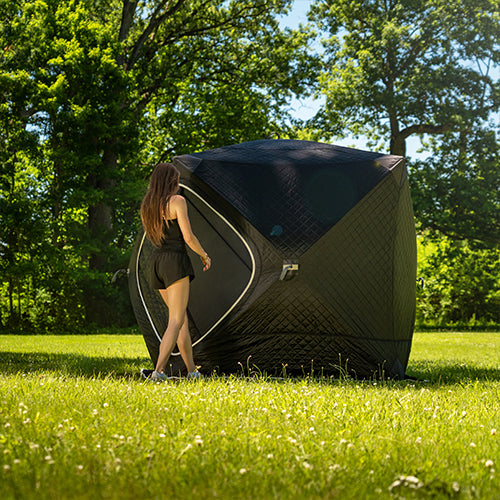
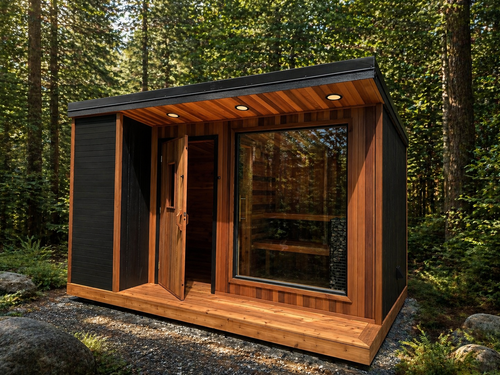
Propane can be particularly useful at cabins, lake properties, and other locations where installing high-voltage service may be impractical. Certain portable models are also designed for use with compatible outdoor sauna cabins and sauna tents.

How to Choose a Propane Sauna Heater

Choosing the heater starts with the sauna room, not simply the maximum BTU number. Room volume, insulation, exposed surfaces, ventilation, and the manufacturer's rated heating capacity all affect proper sizing.

Calculate your sauna volume

Multiply the room's length, width, and height to determine its cubic volume. Then follow the manufacturer's sizing method for glass, masonry, and other uninsulated surfaces that can increase the heating load.

Match the output to the room

Compare your adjusted room volume with the heater's specified range. Propane sauna heaters vary considerably in output: portable residential models can produce around 15,000–28,000 BTU, while larger installed gas heaters may reach 40,000 BTU, 80,000 BTU, or higher.

Check the fuel requirements

Use the propane supply, hose, regulator, pressure, and connections specified for the heater. Don't assume components are interchangeable between models, even when two heaters use the same fuel.

Review ventilation and exhaust requirements

Requirements vary significantly by design. Some installed gas heaters use dedicated direct or vertical venting, while certain portable propane models operate without a chimney but require specified intake and exhaust openings to the outdoors. Follow the manual for the exact heater.

Check clearances before installation

Confirm required distances between the heater and walls, benches, ceilings, and combustible materials. Heat shields and other approved protection can affect allowable clearances on some models, but only when specified by the manufacturer.

Review power requirements

Propane doesn't automatically mean electricity-free. Some heaters require electrical power for controls or related components, while models such as the SaunaLife TITAN SL1 operate without an electrical connection. Check the specifications before planning an off-grid installation.

Planning a Propane-Heated Sauna

Propane introduces different installation considerations than an electric sauna heater. Treat the heater, fuel supply, ventilation, and sauna room as one system and follow the manufacturer's installation manual throughout the project.

Choose an approved installation location

Use the heater only in the environments approved by its manufacturer. Some models are designed for permanent sauna installations, while others are specifically intended for outdoor sauna cabins, compatible sauna tents, portable applications, etc.

Plan the propane supply correctly

The fuel system needs to provide the pressure and flow specified for the heater. Use approved components and follow manufacturer instructions and applicable gas codes when locating and connecting the propane supply.

Provide the required ventilation

A sauna needs ventilation, and propane combustion can introduce additional requirements. Follow the heater's specified intake and exhaust openings, combustion-air requirements and any applicable venting instructions instead of applying a generic sauna ventilation layout.

Follow the heater's exhaust design

Not every propane model uses a chimney. Permanently installed gas heaters may require direct or vertical venting, while certain purpose-built portable heaters use a different ventilation design without a chimney. The heater manual should determine the configuration.

Check local installation requirements

Gas-appliance, building, fire, and permitting requirements vary by location and heater design. Permanent propane installations should comply with applicable codes and any professional installation or inspection requirements in your jurisdiction.

Propane vs. Electric vs. Wood Sauna Heaters

All three can produce traditional sauna heat, but they require very different utilities and installation plans.

Propane
Electric
Wood

An electric heater generally offers the simplest day-to-day operation where sufficient electrical service is available. Wood appeals to homeowners who want a fire-heated sauna, while propane occupies useful territory where gas fuel is practical and electrical capacity or firewood management presents a problem.

Energy source

LP propane
Electricity
Firewood

High-voltage service

Not always required
Commonly required
Not typically required for heat

Stored fuel

Propane supply
None
Firewood

Combustion

Yes
No
Yes

Venting

Model-dependent
No combustion vent
Chimney/flue

Operation

Model-dependent controls
Convenient controls
Manual fire management

Good fit for
Properties where propane is practical
Convenient residential heating
Traditional wood-fired setups

Why Buy Propane Sauna Heaters for Sale at NW Immersion?

NW Immersion carries purpose-built sauna heating equipment and can help you compare the specifications that determine whether a heater works with your sauna and property.

Heaters Designed for Sauna Use

Shop heaters engineered specifically for sauna environments, with appropriate heating output, stone capacity, controls, and safety features according to the individual design.

Help With Heater Sizing

Our team can help you compare room volume and heater capacity so you can narrow the options according to your sauna's dimensions and construction.

Guidance Before Installation

Review fuel, ventilation, clearance, and other product requirements before installation begins so the site can be prepared around the heater you've selected.

Nationwide Shipping

NW Immersion ships most qualifying products within the 48 contiguous United States. Shipping availability, charges, and freight requirements can vary by product.

Frequently Asked Questions

What is a propane sauna heater?

A propane sauna heater is a purpose-built gas appliance that burns liquid propane to produce sauna heat. Depending on the design, it can heat both the room and sauna stones, allowing water to be added to the stones for löyly when approved by the manufacturer.

How does a propane sauna heater work?

Propane is burned inside the heater to generate heat, which warms the sauna and, on traditional models, the stone mass. The exact combustion, ventilation, exhaust, and control systems vary by heater, so operation and installation should follow the manufacturer's design.

Are propane sauna heaters good?

Yes, particularly where propane is readily available or sufficient electrical service would be difficult to provide. The best propane sauna heater for a particular sauna is one correctly sized for the room and approved for its intended installation, fuel supply, and ventilation setup.

Is propane cheaper than electricity for a sauna?

It depends on local energy prices and heater efficiency. For example, a 6 kW electric heater running at full output for one hour uses 6 kWh, costing about $1.08 at $0.18/kWh. A propane heater's hourly cost depends on its BTU input and local propane price. Compare your actual utility rates before choosing based on operating cost alone.

What size propane sauna heater do I need?

Match the heater's rated room-volume range to your sauna's adjusted cubic volume. For perspective, the portable SaunaLife TITAN SL1 is rated for 140–425 cubic feet in insulated rooms, while Scandia's 40,000 BTU installed gas heater is rated for rooms up to 616 cubic feet. Always use the sizing guidance for the specific heater.

Can you use a propane sauna heater indoors?

Only if the specific heater is approved for that environment. Propane heaters differ in combustion and exhaust design, therefore an indoor installation must meet the manufacturer's ventilation, venting, fuel, clearance, and combustion-air requirements along with applicable local codes.

Does a propane sauna heater need ventilation?

Yes. Ventilation requirements depend on the heater design. For example, the SaunaLife TITAN SL1 specifies fixed intake and exhaust openings, including exhaust directly outdoors, while permanently installed gas heaters can use dedicated flue systems. Follow the exact manufacturer's ventilation plan.

Can a propane sauna heater be portable?

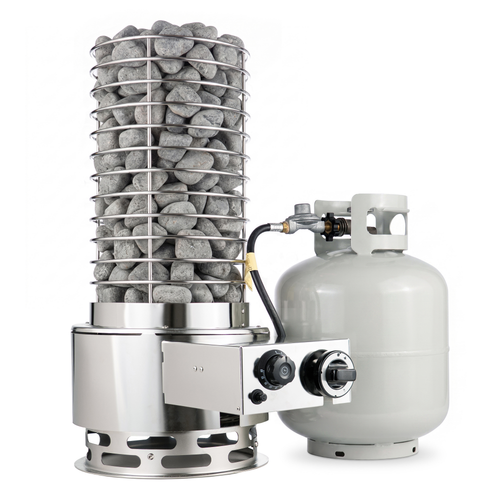
Yes, if it is specifically designed for portable use. The SaunaLife TITAN SL1 is one example of a portable propane sauna heater, weighing about 33 pounds and designed for compatible outdoor sauna cabins and sauna tents. Permanently installed gas heaters should not be treated as portable appliances.

Can you use a propane torch as a sauna heater?

A general-purpose or torch propane sauna heater setup is not a substitute for equipment engineered for an occupied sauna. Use a purpose-built heater with the appropriate combustion controls, ventilation requirements, clearances, and safety systems for its intended sauna environment.

Can you build a DIY propane sauna heater?

A DIY propane sauna heater or homemade propane sauna heater is not advisable for residential sauna use. Building a fuel-burning appliance introduces risks involving propane leaks, fire, carbon monoxide, combustion air, exhaust, and surface temperatures. A purpose-built heater provides documented installation, ventilation, clearance, and safety requirements.