


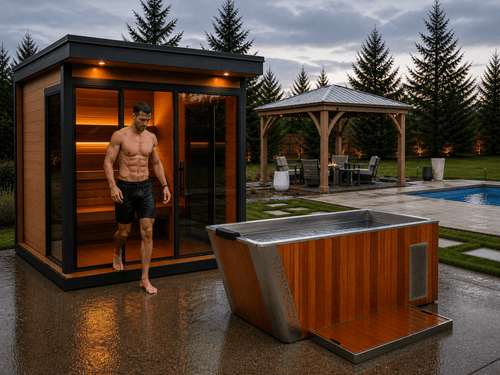


A sauna becomes part of the rhythm of your home. It's where early mornings begin, where busy days come to a close, and where family and friends gather to slow down for a while.
A little planning before installation helps ensure that experience starts on the right foot.
Choose the right location for your sauna
The best sauna locations strike a balance between practicality and atmosphere. While technical requirements matter, so does creating a space you'll genuinely look forward to using.
Consider privacy and relaxation
The most memorable sauna experiences happen in spaces that feel tucked away from the demands of everyday life.
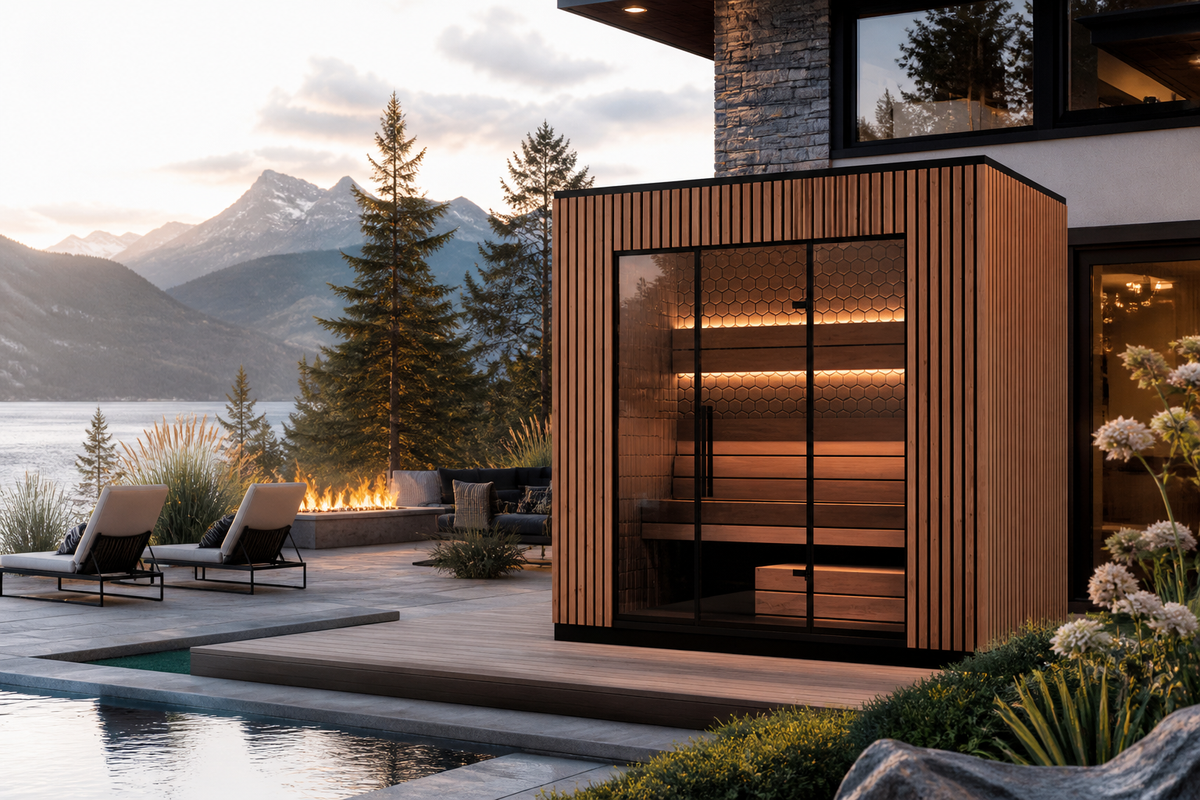
Many homeowners choose locations with natural privacy, such as a secluded corner of the backyard, a wooded area of the property, or a space shielded by landscaping. Others position their sauna to take advantage of mountain views, water features, gardens, or other scenery that contributes to the overall experience.
Think about what you'll see when you step outside and what you'll hear when the heater is warming the room. A thoughtful location can transform a sauna from a wellness feature into a destination.
Think about convenience
A sauna that's easy to access has higher chances to get used more often.
Consider how far you'll be walking from your home, particularly during colder months. A location that feels ideal in July may feel less appealing during a rainy evening if it requires crossing a muddy lawn or navigating an unlit path.
If you're planning to incorporate cold therapy into your routine, this is also the time to think about the relationship between your sauna, cold plunge, outdoor shower, or other wellness features.
Plan for long-term use
It's easy to focus on installation day. It's equally important to think several years ahead.
Will nearby trees continue to grow? Are there future landscaping projects planned for the area? Could additional outdoor structures eventually affect access or airflow?
A sauna is designed to provide decades of enjoyment. Choosing a location with the future in mind helps preserve that experience for years to come.
Understand space requirements
Before selecting a final location, it's important to think beyond the sauna's footprint.
Every sauna requires adequate space for installation, maintenance, and safe operation.
Sauna footprint vs clearance space
The dimensions listed for a sauna represent the structure itself, but additional clearance is typically recommended around the exterior.
Leaving room around the sauna simplifies installation, allows for future maintenance, and helps create a more comfortable environment around the structure. It also provides flexibility for landscaping and other design elements you may wish to add later.
Leave room for maintenance access
Like any investment exposed to the elements, a sauna benefits from occasional inspection and maintenance.
Access around the exterior allows for cleaning, wood care, heater servicing, and routine upkeep without unnecessary obstacles. Planning for maintenance from the beginning can save significant frustration down the road.
Planning for accessories and add-ons
A lot of customers begin with a sauna and gradually expand their wellness space over time.
Cold plunges, outdoor showers, changing areas, lounge seating, fire features, and landscaping can all enhance the experience. Allowing extra space now creates opportunities for future additions without requiring major site modifications later.
Prepare the foundation
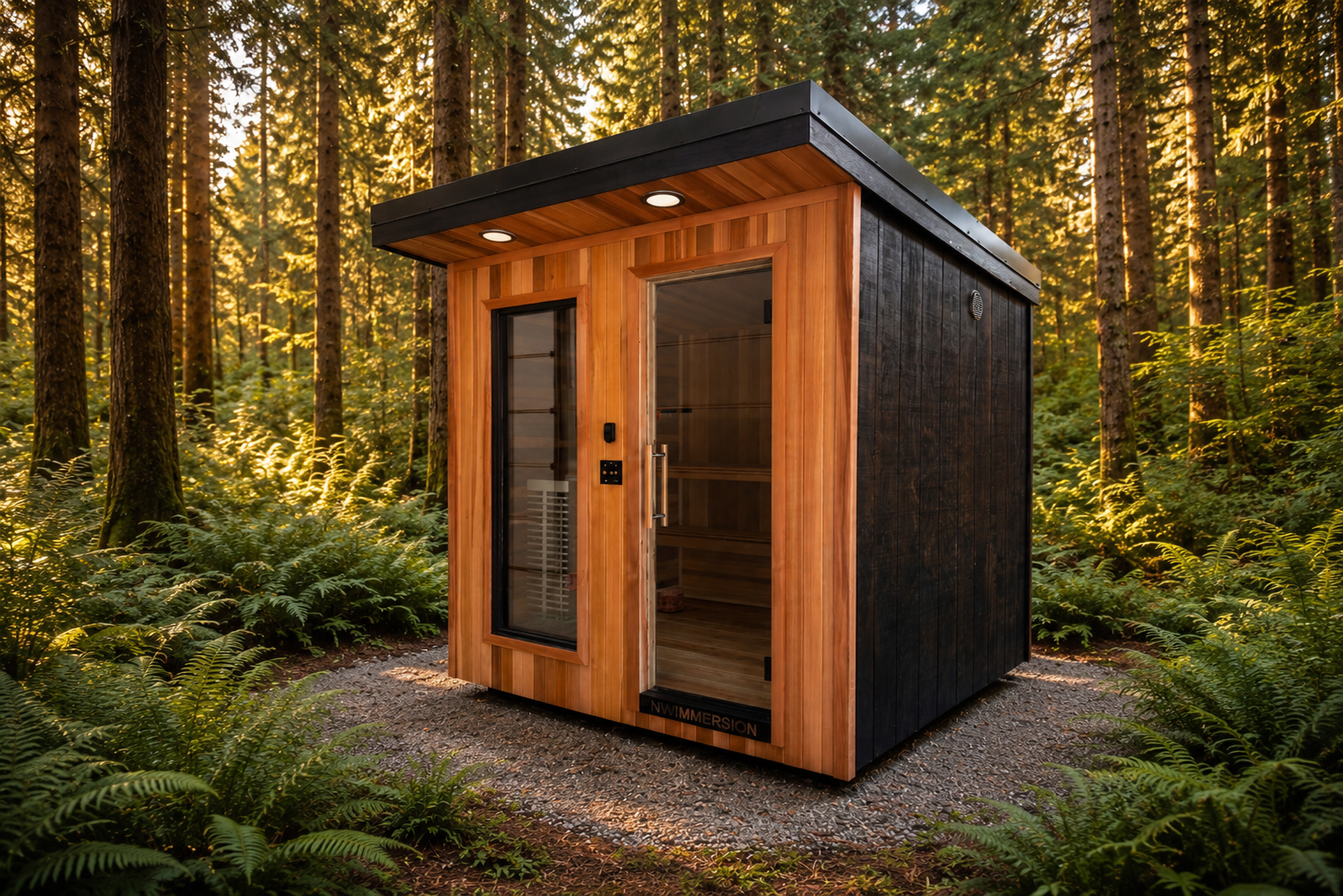
A sauna performs best when built on a stable, level surface.
The ideal foundation depends on the type of sauna, the site conditions, and your long-term plans for the space.
Concrete pads
Concrete remains one of the most durable and dependable foundation options available.
A properly constructed concrete pad provides excellent stability and creates a clean finished appearance. For customers seeking a permanent installation, concrete is often the preferred solution.
Gravel and crushed rock foundations
Compacted gravel or crushed rock can also provide an excellent base when installed correctly.
This approach offers strong drainage characteristics, helps prevent standing water around the sauna, blends naturally into outdoor environments, etc. Proper site preparation remains essential to make certain the surface remains level and stable over time.
Deck installations
Meanwhile, there are homeowners who choose to place their sauna on an existing deck or custom-built platform.
Before proceeding, it's important to verify that the structure can safely support the weight of the sauna and its occupants. A qualified contractor or structural professional can help evaluate existing conditions if needed.
Other suitable surfaces
Paver patios, stone installations, and other hardscape surfaces may also be appropriate depending on the project.
The most important consideration is that the foundation remains level, stable, and capable of supporting the sauna throughout changing weather conditions and years of use.
Consider delivery access
One of the most overlooked aspects of sauna planning has nothing to do with the sauna itself. It's making sure the installation location can be reached efficiently and safely.
Can we get the sauna to the installation site?
Consider the path between the delivery location and the final installation area.
Gate openings, walkways, side yards, and access corridors should provide adequate clearance for moving materials and components. Tight turns, retaining walls, narrow passages, and other obstacles may influence the installation approach.
If access is limited, our team can recommend practical solutions during the planning process.
Watch for overhead obstructions
Ground-level access is only part of the equation.
Tree branches, utility lines, roof overhangs, pergolas, and other overhead obstacles can affect the delivery route and installation process. Identifying these elements in advance helps avoid unexpected complications on installation day.
Slope and terrain considerations
Uneven terrain does not automatically eliminate a location from consideration, but it may require additional planning.
Significant slopes, soft ground, rocky terrain, or difficult site conditions can affect both foundation preparation and installation logistics. Evaluate these factors early to allow for appropriate recommendations and site preparation.
When a site visit may be recommended
Some properties present unique opportunities and challenges.
Custom sauna projects, complex landscapes, waterfront installations, hillside properties, and commercial applications may benefit from a site visit or consultation. Taking the time to evaluate the space thoroughly can lead to a better finished result.
Electrical planning for electric saunas
Electric sauna heaters provide consistent performance, simple operation, and precise temperature control. Proper electrical planning helps ensure your system operates safely and reliably from the first day.
Understand power requirements
Electrical requirements vary depending on the sauna model, heater size, and overall configuration.
Some systems require relatively straightforward electrical connections, while larger installations may require additional planning. Reviewing electrical requirements early in the process allows homeowners and electricians to prepare accordingly.
Work with a licensed electrician
Professional installation helps ensure compliance with local codes and manufacturer requirements.
Your electrician can evaluate panel capacity, install dedicated circuits when necessary, and coordinate any upgrades required to support the sauna system.
Addressing these considerations before installation day helps prevent unnecessary delays.
Common electrical considerations
Several factors can influence installation complexity, including:
- Distance between the sauna and electrical panel
- Existing service capacity
- Outdoor wiring requirements
- Future expansion plans
- Local electrical codes
Special considerations for wood-burning sauna heaters
Few experiences compare to the atmosphere created by a traditional wood-fired sauna. The gentle crackle of the fire, the aroma of heated wood, and the connection to centuries of sauna tradition create something uniquely memorable.
Wood-burning systems do, however, require additional planning.
Chimney clearance requirements
Proper clearance around the chimney system is essential for safe operation.
Trees, fences, neighboring structures, sheds, rooflines, and other combustible materials must be considered when determining placement. Clearance requirements vary depending on the heater and chimney system being used.
Our team can help identify the applicable requirements for your project.
Local regulations and permits
Some municipalities have regulations governing wood-burning appliances. Before selecting a wood-fired heater, verify local requirements, burn restrictions, permit obligations, and other applicable regulations.
Early research helps avoid complications later in the process.
Fuel storage and safety planning
Convenient access to firewood contributes to a more enjoyable sauna experience.
Homeowners incorporate dedicated wood storage into their sauna area, creating a cohesive and functional outdoor retreat. Proper storage also helps keep fuel dry and readily available throughout the year.
Need help confirming your setup?
Our team can help review placement, access, utilities, and heater requirements before you get too far into planning.
Contact Our TeamPreparing for indoor or outdoor placement
Indoor and outdoor saunas share the same core planning foundation, but the details change depending on the sauna you choose and where it will be installed.
Preparing for an indoor sauna
Indoor saunas offer exceptional convenience and year-round accessibility. With thoughtful planning, they can integrate seamlessly into both new and existing homes.
Select the right indoor room
Indoor saunas are installed in:
- Home gyms
- Wellness rooms
- Basements
- Primary suite retreats
- Pool houses
- Dedicated spa spaces
The ideal location provides sufficient space, convenient access, and compatibility with the home's overall layout.
Ventilation and airflow
Proper airflow contributes to comfort, performance, and long-term durability.
Each indoor sauna configuration has unique ventilation considerations. Planning for adequate airflow during the design phase helps create a more enjoyable sauna environment and supports healthy moisture management.
Flooring and moisture considerations
Heat and humidity are natural components of the sauna experience. Selecting appropriate flooring materials and protecting surrounding finishes can help preserve adjacent spaces while simplifying maintenance.
A little preparation upfront often leads to years of trouble-free enjoyment.
Preparing for an outdoor sauna
Outdoor saunas create a distinctive connection between wellness and nature. Rainfall, changing temperatures, fresh air, and seasonal landscapes become part of the experience.
Thoughtful site preparation helps maximize both comfort and longevity.
Drainage and water management
Water should always have a place to go.
Proper drainage around the sauna helps minimize moisture-related issues and protects the surrounding landscape. Site grading and foundation selection play an important role in long-term performance.
Sun, wind, and weather exposure
Environmental conditions can influence both comfort and maintenance requirements. A location with some protection from prevailing winds may improve comfort during colder months.
Similarly, considering sun exposure can help shape how the space feels throughout the day and across different seasons.
Planning for year-round use
The best outdoor sauna spaces remain inviting throughout the year.
Lighting, walkways, landscaping, seating areas, and nearby cold therapy features can all contribute to a more comfortable experience regardless of season. Many homeowners find themselves using their sauna far more often once these supporting elements are in place.
Permits, HOA requirements, and local regulations
Every property is different, and local requirements can vary considerably from one jurisdiction to another. Pay attention to these requirements early to save time and prevent unnecessary surprises.
When permits may be required
Depending on your location, permits may be required for certain aspects of the project, including electrical work, foundations, accessory structures, or wood-burning installations. Local building departments can provide guidance specific to your property.
HOA and neighborhood restrictions
Homeowners associations occasionally maintain guidelines regarding accessory structures, setbacks, appearance standards, or placement requirements. Reviewing these guidelines before installation can help avoid delays during the approval process.
Property setback requirements
Many municipalities require structures to maintain minimum distances from property lines, easements, and neighboring buildings. Verifying setback requirements early helps make sure your preferred location remains viable.
Why check local regulations early?
Most permitting questions are straightforward when addressed at the beginning of the project. A small amount of research upfront can prevent scheduling delays and allows the installation process to move forward with ease.
Final readiness before installation day
Preparation is rarely complicated, but a final review helps guarantee everything is ready when installation begins.
Final site readiness checklist
Before installation, verify that:
- The foundation is complete and level
- Access routes are clear
- Utilities are prepared
- Any required permits have been secured
- The installation area is free of obstructions
- Site preparation
- Delivery
- Assembly or placement
- Utility connections
- Final inspection and walkthrough
Can a sauna be installed on gravel?
Yes. A properly prepared and compacted gravel foundation is a popular option for many outdoor sauna installations.
Do I need a concrete slab?
Not necessarily. Concrete is an excellent foundation choice, but gravel, pavers, decking, and other stable surfaces may also be appropriate depending on the project.
How much clearance should I leave around my sauna?
Clearance requirements vary based on the sauna model, heater type, and maintenance needs. Our team can provide guidance specific to your installation.
Does my sauna need a permit?
Permit requirements vary by jurisdiction. We recommend checking with your local building department before installation.
Can I install a sauna under a covered patio?
In many cases, yes. Clearance, ventilation, and heater requirements should be reviewed to determine whether the location is suitable.
How close can a sauna be to my home?
This depends on local setback requirements, building codes, and the specific sauna configuration.
Can I add a cold plunge later?
Absolutely! Many homeowners begin with a sauna and expand their wellness space over time as their needs evolve.
Ready to review the plan?
Share your sauna location, installation details, and questions with NW Immersion before installation day.
Contact Our TeamReady to turn the plan into a sauna space?
Use this guide as a checklist before installation day. When the location, foundation, delivery route, utilities, and local requirements are clear, the project has a much better path from idea to daily ritual.